


The Oscars

My wrap up of 2025: a year in movies, the most accurate predictions for Oscar winners, and my favorites in each category. Read this before the Oscars to get caught up to speed.
Tonight is the night. The predictions are in and the red carpets are rolled out. But the question remains: who will win? And the more interesting question to me: who should win?
The Academy is always changing as a voting body and a social institution. This isn’t the club of John Wayne, Elizabeth Taylor, Charlton Heston, Faye Dunaway, and Marlon Brando like back in the golden age. That particular group of people had certain tastes and attitudes which rippled out into the movies they selected and championed. This was the view of Hollywood.

Today Billie Eilish, Jimmy Kimmel, The Weekend, Russell Brand, and Ariana Grande are some of our Academy members. These celebrities vote on award selections like Best Picture. They decide which movies catch the attention of our entire culture. Tinseltown has changed.
If you check any of the big trades, predictions have favored two films for the majority of the categories: Sinners and One Battle After Another. What I considered the best films of the year are missing from both top categories and smaller awards. I think it's fair to say my taste and the Academy’s are ships passing in the night. So I’d like to answer two questions: what’s going to happen tonight and what — in my ideal world — would happen?
BEST PICTURE
The predictions bet on One Battle After Another to take this award. For me, the choice is simple: Marty Supreme was the best movie of 2025. It took the thrilling, adventurous, and sometimes comedic soul of Uncut Gems and improved upon it with a more psychologically interesting protagonist, an anti-hero who chases his ambitions to the detriment of those around him.
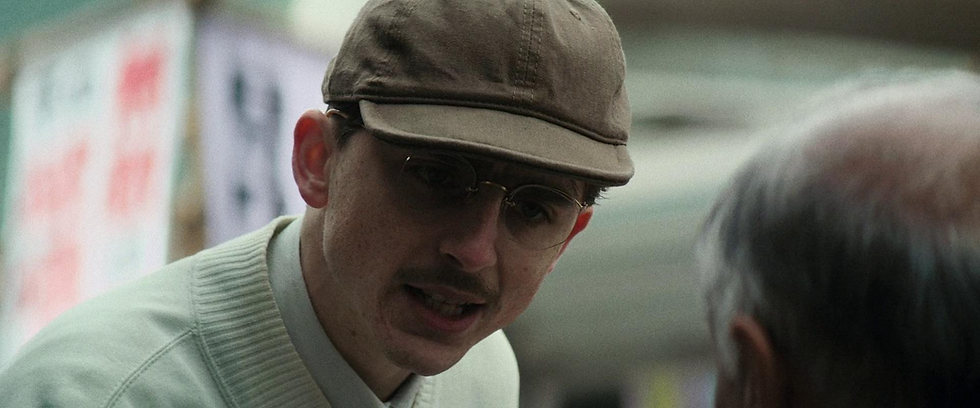
To director Josh Safdie, a villain and a hero are two sides of the same coin. Marty is a portrait of the cost of success and ego. He’s a single-minded visionary extremist in a world of half measures and averages. The movie is a thrilling ride. It has an all-star ensemble cast, a watertight script from Safdie and the great Ronald Bronstein (writer of Good Time and Uncut Gems), and a fascinating period setting which seems to blend elements of a 1980s retro-futurism into the era of the American 1950s. Why are we hearing vaporwave electronica in a 50s sock hop bowling alley? I don’t know, but it works!

BEST DIRECTOR
The predictions again favor One Battle After Another for this category, crowning Paul Thomas Anderson as the presumptive winner. While PTA is certainly one of our greatest living directors (There Will Be Blood and Boogie Nights are hall of fame movies in my book), I think his latest project missed the mark.

In my ideal world the award belongs to Josh Safdie for Marty Supreme or Joachim Trier for Sentimental Value. As I wrote in my piece about The Golden Globes, Sentimental Value fills an important niche Hollywood has forgotten: the mid-budget character drama. This type of story — a handful of characters working through their fraught relationships — used to be the bread-and-butter of the Burbank studios until the loss of DVD sales and the rise of streaming jeopardized the profitability of the mid-budget film and made the big budget tentpole blockbuster the focus of the theatrical industry.

With Sentimental Value, director Joachim Trier and actors Renate Reinsve, Stellan Skarsgård, and Elle Fanning are bringing back a smaller, more intimate story about family and the wounds we often inflict on one another while pursuing our own senses of fulfillment. Funnily enough, Sentimental would be a great double-bill with Marty Supreme; if Marty shows us the meteoric and contentious rise of the star who ruins all of his relationships to get there, Sentimental shows us the slow descent of the visionary back down to the earth to pick up the pieces and salvage the family life he previously ignored to pursue his craft.
BEST ACTOR
The predictions favor Michael B. Jordan for Sinners. My vote would go to Timothée Chalamet for Marty Supreme. But that’s too easy, right? Plus the guy is doing well enough already; he’s somehow in both the largest franchise action flicks and the most interesting mainstream art films of our time. Timothée will have his day in the Oscars sun (if he can avoid being clipped out of context in discussions of ballet and opera); but I don’t think it’s this year.

No, a far more interesting pick for Best Actor would be Ethan Hawke for Blue Moon. How the tall, dashing Hawke transformed himself into a tiny, balding Broadway writer in a pitiful one-sided love story, the world may never know. Director Richard Linklater joked that Hawke wasn’t right for the role even a few years ago; he had to wait until Hawke was older and less attractive to do it in a believable way. Blue Moon takes us to the old New York of writers and show-business. E.B. White and Sardi’s. Half hilarious, half pathetic, this 1940s time capsule shines for its razor-sharp banter and cringe-inducing tragedy of Ethan Hawke as troubled artist Lorenz Hart who undermines his own potential one word at a time. The dialogue will have you fluctuating between near-excessive cringe and second-hand embarrassment and the release of laughter. It’s undeniable that Hawke nailed it; one of the best embodiments of a character I’ve seen in a while.

BEST ACTRESS
The predictions hail Jessie Buckley as the winner with such a comfortable lead that it’s fair to say she can install her Oscar display case at home. But if it were up to me, I’d vote Renate Reinsve in Sentimental Value. I first watched Renate act six years ago when I saw The Worst Person in the World (2020), a dark rom-com and coming-of-age story about a young woman searching for meaning while suffering from her impulsive decisions. She made that movie what it was. Her presence on screen, coldly Scandinavian charm, and her unique ability to shift from complete emotional vulnerability to careless adventurer shined again in Sentimental Value, this time as the daughter of a Marty Supreme-type character who has wounded his family in the single-minded pursuit of his art. Reinsve brings the emotional core of the movie; she allows us to feel the fractures in the family. She also teaches us how to put the pieces back together in a surprisingly optimistic arc of forgiveness and reconciliation.

BEST SUPPORTING ACTOR
Again the Academy Gods favor One Battle After Another, hailing Sean Penn as the lantern-jawed white supremacist villain with a hard-on for black girls. The role seemed cartoonish and strangely fetishistic to me, an RFK cut-out of evil MAGA tropes filtered through the mind of a pothead Californian LARPing as a 60s radical. The role betrayed Penn’s great emotional seriousness which we've seen in movies like Mystic River. I’d give it to Stellan Skarsgård for Sentimental Value.

When Skarsgård won at The Golden Globes, he talked about how theatergoing has almost disappeared. “In a cinema, when the lights go down, and eventually you share the pulse with some other people, that’s magic. Cinema should be seen in cinemas.” Skarsgård, with the benefit of age and wisdom, sees a change in the industry that many seem to be ignoring. He’s a very talented actor and a champion of the kinds of films that I believe are important to Hollywood’s survival and potential resurgence in the future. Despite all my reservations about these kinds of award shows, Skarsgård’s win at The Golden Globes gave me a twinge of hope. I don’t think he has a chance at the Oscars with two One Battle After Another nominees standing in his way, but it’s just an award show at the end of the day.
BEST SUPPORTING ACTRESS
Hold on. This might be a historic first. I agree with the Academy on an award? It’s almost too hard to believe but yes both the presumptive winner and my personal favorite for the Best Supporting Actress category is Amy Madigan for Weapons.

Weapons is the latest in a trend of smartly made, high concept elevated horror films. Director Zach Cregger, who shocked us all with Barbarian, returns with a simple premise: a little boy goes to school to find that his entire class is missing. We soon learn that all the children mysteriously got out of bed in the middle of the night, ran into the dark, and never came back. At the heart of the terror in this story of missing children in Norman Rockwell suburbia is Madigan’s villain. It’s her maniacal, almost clownish expressions and voices which sell the idea of a psychopathic witch who has cursed this peaceful town. Madigan brings such force to his role; I see in it slivers of Anthony Hopkins’ Hannibal Lecter and Bette Davis in What Ever Happened to Baby Jane? I’m just happy The Academy and I finally agree on something. Maybe now my readers will know I’m not just playing the contrarian for fun.

ORIGINAL SCREENPLAY
Again the predicted winner is Sinners. I think this is one of the strongest categories of the entire night: Blue Moon, Marty Supreme, and Sentimental Value could all take the win and I’d be happy for any one of them. But in my ideal world, this award would fall to the least-known nominee (at least among American audiences). I’d give it to Jafar Panahi’s minimalist, gripping thriller It Was Just An Accident.

Accident follows a mechanic who runs into someone from his past. Suddenly, the mechanic’s entire demeanor changes. He captures the man and brings him out to the desert. The viewer is wondering how such a seemingly kind mechanic could be a monster? Or maybe his captive is the monster and the mechanic is rightfully seeking justice for some past harm? The genius of Panahi’s story is that it looks at monsters and victims not during the action, when they're either inflicting violence on others or receiving it, but when the dust settles. It shows how monsters return to their normal lives and build families. It shows how trauma follows their victims in a kind of phantom pain, allying them with would-be strangers in a new vengeful quest which haunts their lives just as much as the original suffering.
I’ve been a longtime fan of Panahi’s mentor Abbas Kiarostami. His films like Where Is the Friend's House? (1987), Life, and Nothing More... (1992), Through the Olive Trees (1994), and Close-Up (1990) introduced me to a new world of Iranian cinema; I think about characters and images from these movies often. For Olive Trees, the third film in what is often called the Koker trilogy, Kiarostami hired a young filmmaker named Jafar Panahi as his assistant director. A year later, Panahi won the Caméra d'Or at Cannes, the first major award for an Iranian film at the festival. In Panahi’s latest It Was Just An Accident, you can see the influence of his mentor Kiarostami. As the mechanic and his growing band of revenge-seeking allies drive around Tehran with their captive, Panahi shoots the growing tension suspiciously through the windows and windshields of a car. Panahi deliberately avoided a musical score for the film, instead relying on natural sound. It’s as if a thriller was shot in the style of a documentary. All these techniques derive some inspiration from the master Kiarostami, but it’s Panahi’s striking original screenplay which grips the viewer and has them posing the question around every turn of Tehran’s streets, “what is the nature of a monster and how will their story end?”

HONORABLE MENTIONS
The rest of the live-action feature categories are predictably dominated by Sinners and One Battle After Another except for four: Production Design, Costume Design, and Makeup and Hairstyling are predicted to go to Frankenstein and Visual Effects is predicted to go to Avatar: Fire and Ash. While neither Frankenstein nor Avatar gripped me with their stories, their visual elements are certainly deserving of the categories mentioned.
But while reading the rest of the predictions, I find myself thinking back on all the great films from 2025 that aren’t given a predictive win here. I think of Wes Anderon’s Phoenician Scheme, a delightful and ornamented storybook of a movie which was my second favorite film of the year behind Marty Supreme. Asteroid City’s overly meta navel-gazing about the meaning of being an artist is fortunately absent and replaced with the very playful and charming sensibility of his Grand Budapest Era. The act structure title cards, the perennial troubled father figure role, and the awesome black comedy storybook aesthetic: Wes is back to doing what he does best. Some of his best set design and cinematography in years.

I think of Mike Figgis’s whirlwind behind-the-scenes look in Megadoc where he follows the clashing egos behind Coppola’s latest film and shows how a great artist with a big budget can get caught in a web of his own making. Ari Aster’s violent and probing Eddington also is conspicuously absent. Was The Academy wounded by some of Aster’s satire on modern politics?
Train Dreams, Anemone, and The Mastermind were all well-crafted dream-like films with beautiful moments. Train Dreams mimicked the best of Terrence Malick's slow poetic style (maybe to lesser effect) and paired it with Denis Johnson's hard writing which seems to contain the wounded soul of the Old West. Tragic, simple, pretty. I still prefer the book but some shots in this are right out of a dream. Everyone should see these three films and encourage Hollywood to pursue more projects in this mold.

And lastly there’s Joseph Kosinski’s F1. When the nominations were announced, many were shocked that a “Top Gun: Maverick but with racecars” action flick could be a contestant in so many important highbrow categories. I, for one, enjoyed F1. The thing that makes Top Gun and F1 both so electric to watch is the absence of words, the dynamism of action and form. These movies remember what many in the Academy seem to forget, that cinema is primarily a popular, visual art. Kosinski returns with a successful formula: the outmoded boomer returns to a modern competitive landscape where new tech and the irreverent youth have made him obsolete until, in the heat of the action, the boomer proves himself once again and saves the day. It’s a powerful myth; and not just for the boomers, but for anyone who feels “it’s so over.”

Yet Maverick has the edge on F1 in that it cleverly works on two levels; Tom Cruise's real fight to save the pre-streaming summer blockbuster as the last action movie star amplifies the thematic weight of Maverick's fictional struggle to save the Navy as a pilot of the old guard. Like the mythic Western gunslinger or lone samurai, in both worlds, Tom Cruise fights for an older method — maybe even a more “honorable” or alive method — which looks to be slipping away. Brad Pitt doesn’t bring the same meta resonance to the picture. He doesn’t fight for an “old way,” just his way. But his cocky renegade presence cements him as the convincing hero of the story. That’s why it’s the best action flick of the year.
Disagree with my takes? Is One Battle After Another the best film ever made? Let me know: milesvstephenson@gmail.com


Comments